
From Curiosity to Quantum: Meet Tewodros Abeje
Tewodros participated in FTI’s High School Quantum Research Program after a chance discovery of quantum computing in his high school’s library. Now he’s conducting research at the University of Maryland, prepping to start his undergraduate career at Princeton University, and recently launched a national Emerging Tech Club Network for high school students. Check out our exclusive Q and A with him below!
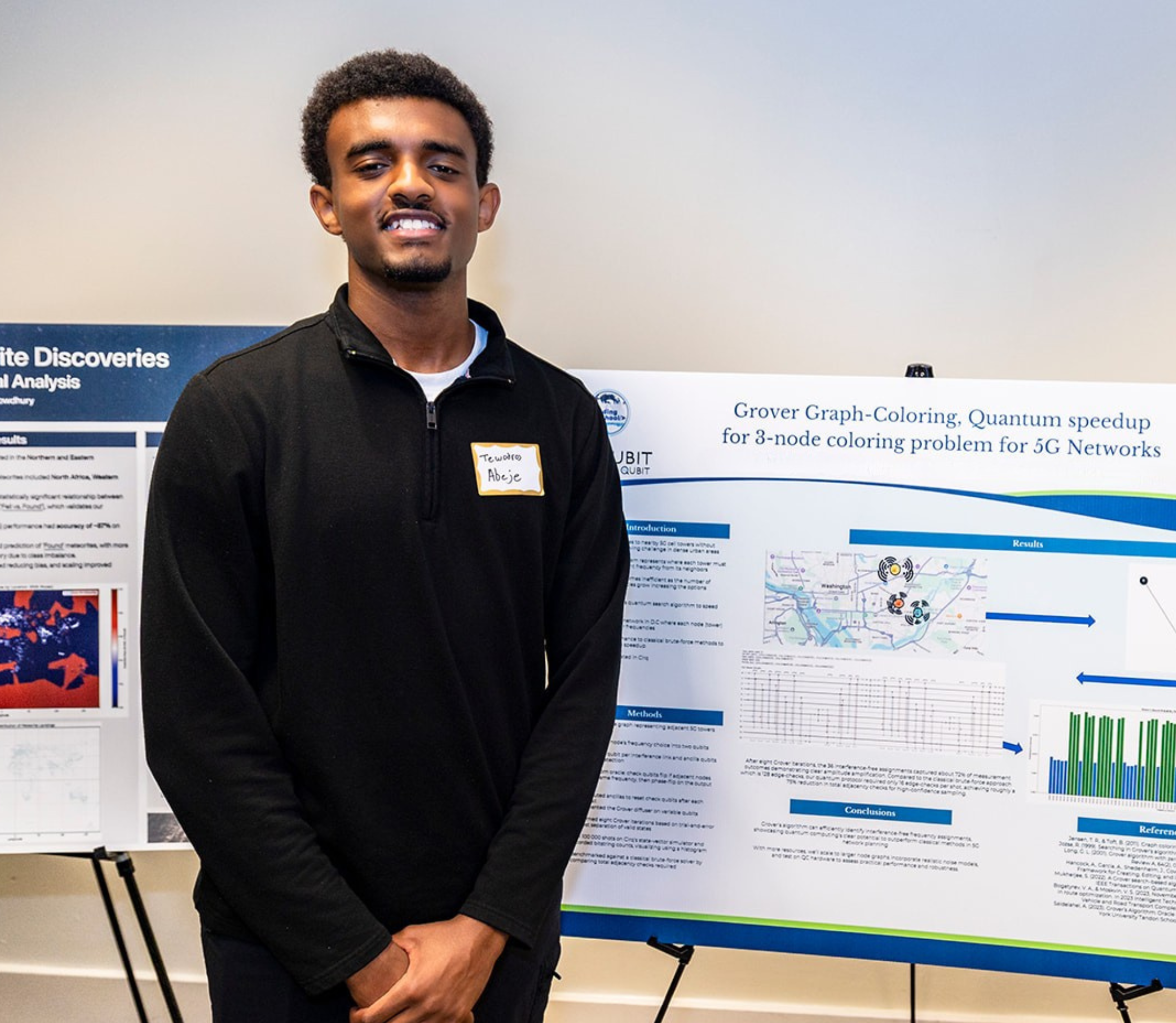
Tewodros at FTI’s 2025 National High School Research Symposium at the University of Maryland.
What are your top interests in emerging tech?
My greatest interest is quantum computing.
Specifically, I’ve been focusing on quantum error correction and quantum state tomography research through a research internship at the University of Maryland (UMD). What really interests me is the gap between theory and practical application—how we can make quantum systems more usable in real-world scenarios like chemistry, machine optimization, and networking.
“There’s a gap between theory and what can actually be applied—and that’s what I want to work on.”
How did you first get interested in quantum computing?
I grew up in a pretty STEM-oriented household. My dad studied mechanical engineering, and I used to work with him on hands-on projects like fixing cars. By the time I got to high school, I thought computer science was the path for me. But once I started taking classes, I realized something was missing—it simply didn’t fully capture my interest.
Then one day, I picked up a book called Quantum Supremacy by Michio Kaku. Thinking it was science fiction at first, I quickly realized quantum computing is real and that’s when everything clicked.
I became fascinated by the idea that we can compute using real physical particles—electrons, protons, things that exist all around us.
“It felt like a way to connect the physical world with technology.”
How did you get more involved beyond the classroom?
From there, I started a quantum club at my school, Quantum Quest Club, and eventually found FTI, where I had my first real research experience working with a mentor on a project involving Grover’s algorithm.
It finally wasn’t just learning concepts. I was actually applying them.
That hands-on experience opened so many doors for me, including speaking as a panelist at Quantum World Congress. In that moment, being surrounded by top researchers, policymakers, and industry professionals made me realize this is what I want to pursue. It pushed me to take things more seriously and pursue more research opportunities, including the work I’m doing now at the University of Maryland.
“At FTI, I didn’t just learn by watching—I learned by actually doing.”
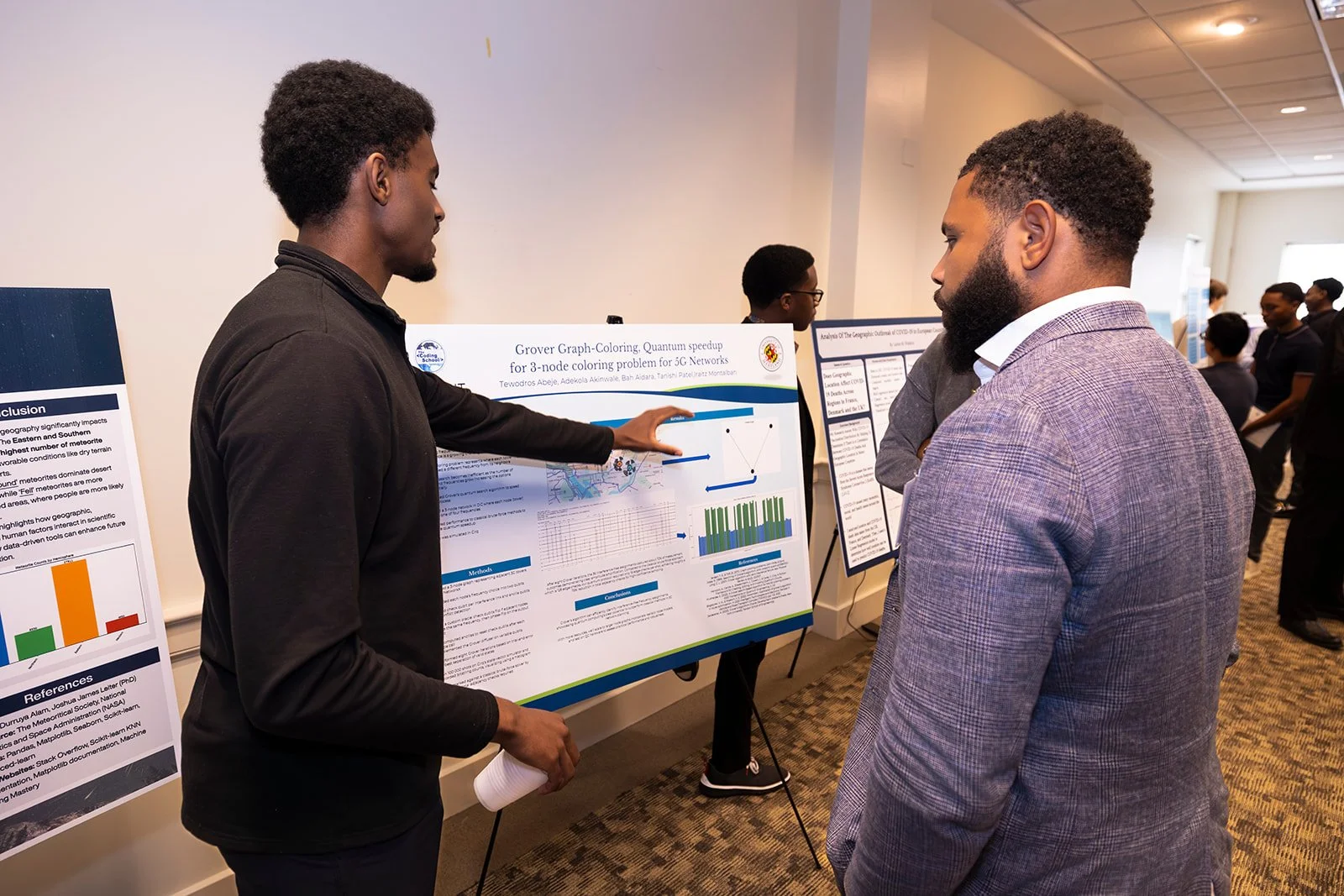
Tewodros presenting his research on Grover’s Algorithm at FTI’s 2025 National High School Research Symposium at the University of Maryland.
What are your plans for the future?
I’ll be attending Princeton University next year, planning to study computer engineering with a minor in engineering physics, so I can combine theory and hands-on work. I’m especially interested in improving quantum hardware and error correction—making systems more stable and practical.
What excites you most about the future of quantum computing?
There are two sides to it: the science and the policy.
On the scientific side, quantum computing is fundamentally different from classical computing. It opens up entirely new possibilities. But on the policy side, there’s a gap. A lot of decision-makers don’t have the technical background to fully understand these technologies. That’s why bridging that gap between research and real-world impact is something I really care about.
“What’s the point of having a technology if it’s not actually helping society grow overall?”
What challenges have you faced in your journey?
One of the biggest challenges has been credibility, or trying to show that, especially as a high schooler, I can contribute meaningfully. Another has been getting people to believe in what I’m building, like starting a quantum club. It’s easy to get lost in the technical side. You have to step back and think about how your work impacts people and society.
Who inspires you the most?
My research mentor at UMD has had a huge impact on me. He showed me that I need to believe in myself first and foremost.
I’ve also been very inspired by my family. I’m a first-generation immigrant from Ethiopia, and my dad took a huge risk moving across countries to create opportunities for us. That mindset of pursuing a goal despite uncertainty has really influenced me.
My sister has also shaped how I think about education as a whole. She helped me realize that you shouldn’t pursue a university as the end goal—the university should help you achieve your goals. That shifted my mindset toward building skills now instead of waiting.
“You shouldn’t be pursuing a university—the university should help you pursue your goal.”
What advice would you give to students just starting out in emerging tech?
First, just be willing to try. Don’t wait until you feel fully qualified. Second, use the resources around you: videos, teachers, mentors. Start small.
And finally, be intentional. Understand what you’re trying to learn, so you can seek the right support.
“Build the skills you want now—don’t wait four years to start doing what you care about.”
From discovering quantum by chance to conducting research and speaking on global stages, Tewodros’ journey reflects what’s possible when you take initiative.
His story is a reminder that you don’t need to wait to start shaping the future—you can begin right now.
